Non-monogamy is having a moment in mainstream media — and fam, it’s complicated.
If you’ve opened any news app, scrolled TikTok, or overheard a podcast conversation in the last few weeks, you’ve probably noticed: everyone suddenly has an opinion about polyamory, swinging, and open relationships. And most of those opinions? Not great.
From Lily Allen’s scorched-earth album about her open marriage to Lindy West’s explosive memoir to David Harbour starring in HBO’s new swinging dark comedy DTF St. Louis — non-monogamy is everywhere. But the question nobody seems to agree on is: is this coverage helping us or hurting us?
Let’s break it down. Real talk, as always.
What’s Actually Happening
The floodgates opened with Lily Allen’s album West End Girl last October. Tracks like “Nonmonogamummy,” “Pussy Palace,” and “Madeline” laid bare her experience of being in an open marriage with actor David Harbour — and it wasn’t pretty. Allen told Elle UK that she had to “contort her own needs” to accept the arrangement Harbour proposed. She said plainly: “It’s not something that I think I would necessarily explore again.”
Google searches for “open marriage” and “non-monogamy” absolutely exploded after the album dropped. Music executives had warned Allen that songs about open relationships “weren’t universal enough” — but turns out, women flooded her DMs with their own negative non-monogamy experiences. The album hit a nerve.
Then came Lindy West’s memoir Adult Braces: Driving Myself Sane, released in March 2026. West writes about reluctantly agreeing to polyamory with her husband, musician Ahamefule Oluo. Her initial reaction? Devastated. She told The New York Times: “Our initial conversation was a lot of me crying and being like, ‘I don’t want anyone else.’” When Oluo started dating another woman, Roya Amirsoleymani, while West was still refusing to engage — the internet had thoughts. The term “poly under duress” (PUD), originally coined by sex columnist Dan Savage, started trending. TikTok exploded with theories about whether West was genuinely happy or just tolerating the arrangement to save her marriage.
And here’s the kicker: West says she’s happy now. All three are living together in what she describes as a functional triad. But the discourse hasn’t calmed down.
Meanwhile, David Harbour — Allen’s ex-husband, whose open marriage request arguably started all of this — is starring in HBO’s DTF St. Louis, a dark comedy about three people exploring a swinging dating app in the suburbs. The Guardian called it “an addictive tale of middle-age, swinging and murder.” Because apparently non-monogamy in pop culture always needs a body count.
On top of all that: ABC pulled The Bachelorette season featuring Taylor Frankie Paul (of #MomTok swinger scandal fame) amid domestic violence accusations. Louis Theroux’s Netflix doc Inside the Manosphere featured guys practicing “one-sided monogamy” and calling it their birthright. And HBO’s Industry had a character opening her marriage as a power move involving a younger employee.
As Salon put it bluntly: Non-monogamy has a PR problem.
What They Got Right
Here’s where we give credit where it’s due:
The “poly under duress” conversation is real and important. PUD is absolutely a thing in the lifestyle. We’ve seen it. Couples where one partner agrees to ENM not because they want it, but because they’re terrified of losing their relationship. That’s not ethical non-monogamy — that’s emotional coercion with a fancy label. The fact that mainstream media is naming this dynamic? Genuinely helpful. It gives people language to identify what’s happening to them.
Lily Allen’s honesty was raw and necessary. Her album wasn’t a hit piece on ENM — it was a woman telling her story. She was pressured into an arrangement she didn’t want, her boundaries were broken, and she processed it through music. That’s valid. Every person in the lifestyle should be honest about the fact that non-monogamy done wrong can cause real harm. Sugarcoating it doesn’t help anyone.
The conversation about consent and boundaries is finally happening at scale. As polyamory educator Leanne Yau told Mashable: “In real life, if a polyamorous relationship starts from a place of cheating, it is very, very unlikely to survive, because you need such a foundation of trust.” That’s the real talk the mainstream needs to hear.
Search interest is up 400% for “ethical non-monogamy” over the last five years. People are curious. They’re looking for information. That’s a door cracked open, even if what they’re finding right now isn’t always the full picture.
What They Got Wrong
And here’s where we push back — hard:
Every single mainstream narrative centers a relationship that started from cheating or coercion. Lily Allen felt pressured. Lindy West was ambushed. DTF St. Louis has a murder. Industry involves an abuse of power. The Bachelorette pick had DV allegations. As therapist Madalaine Munro told Mashable: “Most mainstream media is driven primarily by the desire to entertain, which means stories are crafted around conflict, rupture, and emotional intensity rather than how harmonious healthy relationships can be.”
No one’s making a prestige drama about the couple who talked for two years, set clear boundaries, went to a swinger party, communicated openly, and went home feeling more connected than ever. Because that’s not “good TV.” But that’s the reality for a massive portion of the lifestyle community.
The poly under duress framing, while important, is becoming the only frame. As Yau pointed out in the Salon piece: “People read a messy story about someone’s relationship and go, ‘A-ha, I told you so.’ It’s confirmation bias for people who already have biases against poly people.” The internet is using these stories to validate the idea that non-monogamy is inherently selfish, destabilizing, and doomed. And that’s just not true.
The numbers aren’t actually changing as much as the coverage suggests. Salon’s reporting found that the percentage of non-monogamous Americans has remained steady at roughly 2–3% of the approximately 70% of Americans in relationships. This isn’t an epidemic. It’s not a “trend sweeping the nation.” It’s a consistent minority that’s finally getting visibility — mostly negative visibility, but visibility nonetheless.
Swinging and polyamory keep getting conflated. These are different relationship structures with different communities, different norms, and different challenges. Mainstream media treats “non-monogamy” as one monolithic thing. It’s not. What works for a triad isn’t what works for a swinging couple who plays together at parties. The nuance gets lost every single time.
Our Take — Dan & Lacy Weigh In
Look, we’ve been in this lifestyle for years. We know what healthy non-monogamy looks like because we’ve lived it, we’ve built a community around it, and we’ve talked to thousands of couples who are thriving in it.
Here’s what the media consistently misses: the boring parts of ethical non-monogamy are the most important parts. The hours of conversation. The check-ins. The boundary-setting. The jealousy processing. The therapy. The Google Calendar invites (yes, really). That’s the real foundation of ENM — not the drama, not the scandal, not the betrayal.
Lily Allen’s story is heartbreaking, and it’s real. But it’s a story about one relationship that was handled badly, not a referendum on non-monogamy as a whole. You wouldn’t read about one terrible marriage and conclude that monogamy is a failed experiment, right? (Well, some people might, but that’s a different blog post.)
What worries us is that people who are genuinely curious about the lifestyle — couples who’ve been quietly wondering if this could work for them — are going to read these stories and run the other way. They’ll see Allen’s pain, West’s tears, and Harbour’s fictional body count and think, “See? It never works.”
But it does work. Every single day. For millions of people. Quietly, beautifully, with more love and communication than most traditional relationships ever achieve.
The real conversation we should be having isn’t “does non-monogamy work?” — it’s “what does ethical non-monogamy actually require, and are you willing to do the work?” Because the answer to that second question separates the couples who thrive from the ones who end up writing albums about it.
The Bottom Line
Non-monogamy is in the spotlight, and that’s not going away anytime soon. The discourse is messy, the takes are hot, and the nuance is getting lost in the algorithm. But this is also an opportunity — for us, for the community, for anyone living this lifestyle authentically — to show the world what this actually looks like when it’s done right.
Not through scandal. Not through murder plots. Through honesty, communication, and the kind of radical trust that most people can’t even imagine.
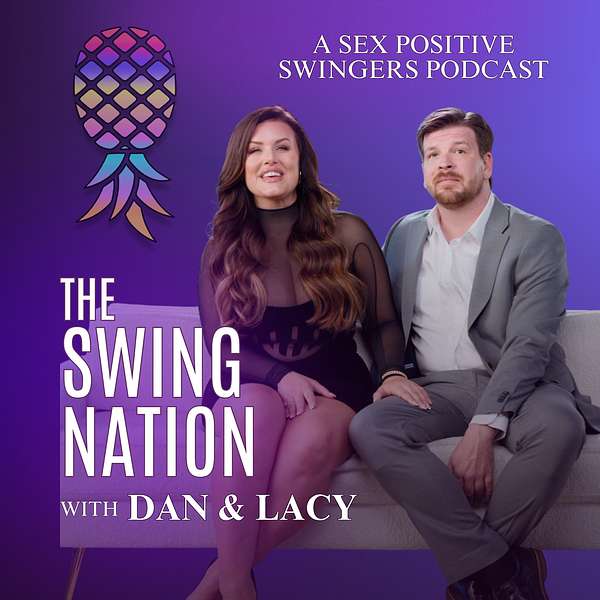
That’s the story the mainstream media isn’t telling. And that’s exactly why The Swing Nation exists.
Stay connected, stay honest, and stay pineapple, fam. 🍍
Sources:
|
🍍 TSN Partner Spotlight SDC — The world’s largest lifestyle dating community |
- Mashable: “Is pop culture giving non-monogamy a bad name?” (April 18, 2026)
- Salon: “Non-monogamy has a PR problem” (April 3, 2026)
- HuffPost: “People Who’ve Been In ‘Poly Under Duress’ Relationships”
- The Guardian: “DTF St. Louis review” (March 2, 2026)
- The New York Times: Lindy West on polyamory (March 4, 2026)