Psychology Today did something useful: it moved one common lifestyle argument out of the gossip lane.
In a May 28 article, Chandra Khalifian, Ph.D., and Kayla Knopp, Ph.D., wrote about moving from fear-based rules to values-based relationships, especially for people navigating consensual non-monogamy, polyamory, and open relationships. Their piece is framed through acceptance and commitment therapy, but the practical heart of it is bigger than therapy language: jealousy is not a verdict, discomfort is not automatically danger, and rules built only to make fear shut up usually do not hold.
That matters because mainstream coverage of non-monogamy usually loves the loud stuff. The headline that makes your group chat go, “Wait, what did they say?” Those stories get clicks, but they can make the lifestyle look like a circus where the only choices are chaos or cold detachment.
This article points at the quieter truth: most of the real work happens before anybody gets naked.
Here is what the mainstream piece got right. It did not pretend that open relationships are emotionally frictionless. Good. Nobody living this honestly needs another shiny myth that “evolved” people never feel jealous. People get jealous. People compare. People wonder if they are enough, if they are replaceable, if the agreement still protects the relationship they care about.
The better question is what you do with those feelings. Do you get curious, name the fear, and ask for the reassurance or repair you actually need? Or do you write a rule that tries to control your partner’s behavior so you never have to feel the scary thing again?
The article also gets right that non-monogamy is not morally superior to monogamy. We love that. Around here, we are not interested in trading one relationship script for another. Swinging can be beautiful when couples choose it with trust, enthusiasm, and clean agreements. Polyamory can be beautiful when everyone involved has a real voice and a real yes. The structure is not the flex. The honesty is.
Where mainstream media still misses the mark is making this sound more abstract than it feels in real life.
“Values-based relationships” can sound like a workshop title until you are standing in a hotel room, half dressed, trying to decide whether the plan you made at home still feels good now that real chemistry is in the room. It can sound neat and tidy until one partner is excited, the other partner is quieter than usual, and everybody has to slow down long enough to tell the truth.
That is where TSN lands hard: values are only useful if they turn into behavior.
If your value is trust, what does trust look like when plans change at midnight? If your value is honesty, do you tell your partner when you are nervous before you become resentful? If your value is freedom, have you made room for aftercare, check-ins, privacy, and the possibility that somebody may need to tap the brakes? If your value is community, are you treating other couples like whole people?
This is the lived-in part that matters for swinging and the broader lifestyle. A rule like “no kissing” or “same room only” is not automatically fear-based. Sometimes it is a perfectly reasonable beginner boundary. The problem is when nobody knows why the rule exists, nobody is allowed to revisit it, and the whole thing becomes a pressure valve for insecurity nobody wants to name.
There is a big difference between “same room only because we are new and want to stay connected while we learn” and “same room only because if I cannot watch every second, I will panic and punish you later.” Same words. Totally different energy.
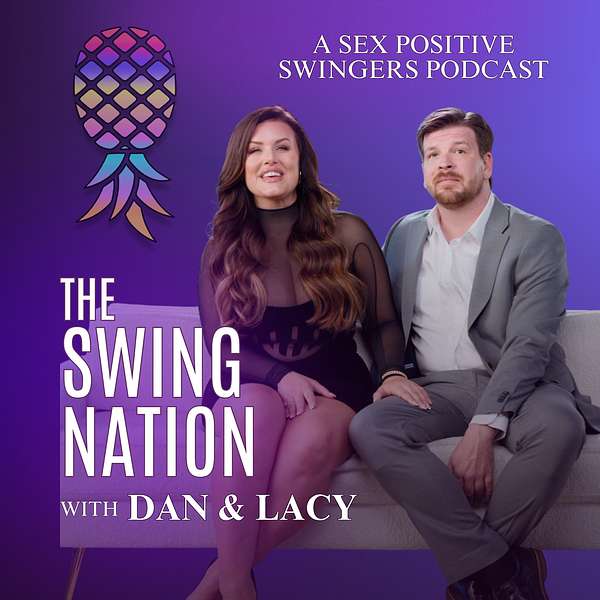
Dan and Lacy’s position is practical: do not use rules as duct tape over a conversation you are avoiding.
Have the awkward talk. Have it sober. Have it before the party, not in the hallway while someone is waiting on you. Ask the unsexy questions. What are we protecting? What are we curious about? What feels like too much? What happens if one of us changes our mind? How do we pause without shame? What stays private?
And then, just as important, tell the truth after. Not the polished version. The real one. “That was hotter than I expected.” “I got weird in my head for a minute.” “I liked it, but I need more reassurance next time.” “That boundary still matters to me.” “I think we are ready to renegotiate this.” That is not failure. That is maintenance.
For the lifestyle community, this is the piece worth taking seriously: fear does not make you bad at non-monogamy. Refusing to deal with fear honestly is what makes people messy.
We need more mainstream coverage that says that plainly. Not every uncomfortable feeling is a red flag. Not every boundary is insecurity. Not every agreement is control. The work is learning the difference, together, without turning your partner into the enemy.
The good news is that lifestyle people already understand something mainstream culture is still catching up to: relationships are built on chosen agreements. They are held together by trust, consent, communication, privacy, repair, and enough humility to admit when the first version of the agreement needs a tune-up.
So here is the pineapple question for the week: which of your rules are protecting your values, and which ones are just babysitting your fear?
|
TSN Partner Spotlight SDC — The world’s largest lifestyle dating community |