Mainstream media has found its favorite new relationship question again: did everybody try non-monogamy, make a mess, and run back to monogamy with their hair on fire?
That is the frame sitting under a new Cosmopolitan UK piece, syndicated by AOL, called “Did the Non-Monogamy Experiment Fail?” The article looks at people who tried open relationships or polyamory and came away burned: broken agreements, jealousy, neglect, pressure, therapy-speak, and the classic move where someone calls it “freedom” when what they really mean is “I do not want to be accountable to you.”
Why does this matter? Because the lifestyle community is living inside two stories at once. One story says consensual non-monogamy is becoming more visible, more discussed, and less automatically treated like a punchline. The other story says that visibility is attracting people who want the language of ENM without the ethics. They like the cool label. They do not like the hard part.
And pineapple people, that hard part is the whole thing.
The Cosmo piece gets some important stuff right. It does not pretend non-monogamy is magic. It says what people inside the lifestyle already know: opening a relationship does not fix a weak relationship. It magnifies what is already there. If the couple avoids hard conversations, now they get to avoid them with extra people involved. If one partner already feels ignored, a new partner will not make them feel safer. If someone treats boundaries like suggestions, they are not suddenly enlightened because they downloaded Feeld.
That is the part mainstream media should keep saying louder. Non-monogamy is not cheating with better branding. It is not a breakup soft-launch. It is not a hall pass someone pressures their partner into accepting because “everyone is more evolved now.” If the agreement is not mutual, honest, and revisitable, it is not ethical. It is just a mess with prettier vocabulary.
Where the mainstream coverage gets wobbly is the bigger implication: that bad non-monogamy proves non-monogamy itself is failing. That is lazy. Monogamy has cheating, resentment, dead bedrooms, secret phones, lonely marriages, and people staying together because splitting the Costco membership sounds exhausting. Nobody writes, “Did the Monogamy Experiment Fail?” every time a husband gets caught in somebody’s DMs.
The relationship structure is not the moral character. The people are.
That does not mean we shrug off harm in ENM spaces. If anything, lifestyle people should be more willing to call it out. We cannot normalize the lifestyle by pretending every open arrangement is healthy just because it has the right vocabulary. Sometimes “I need freedom” means “I want options without responsibility.” Sometimes “you need to work on your jealousy” means “I do not want to reassure you.” Sometimes “we are open” means one person is excited and the other is quietly swallowing glass to keep the relationship alive.
That is not liberation. That is pressure in a pineapple shirt.
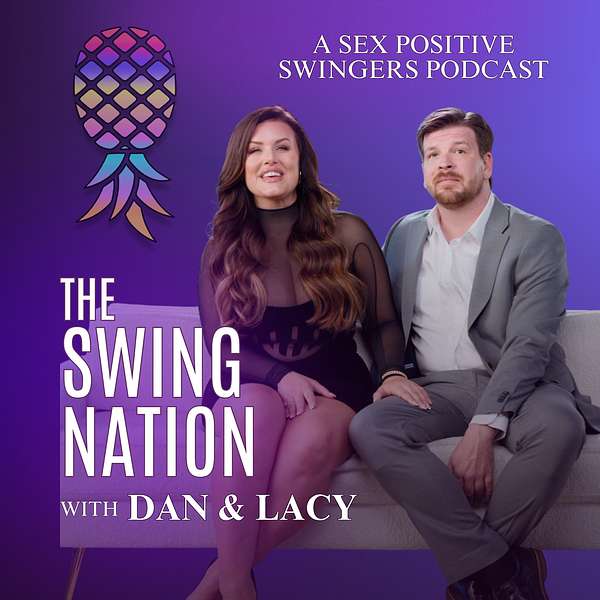
Dan and Lacy’s TSN position is pretty simple: the lifestyle only works when the foundation is boring in the best way. Clear agreements. Real consent. Privacy that is respected. Testing and health talks treated like grown-up logistics, not mood-killers. Boundaries said out loud before the room gets hot. Aftercare that does not disappear once everybody gets dressed.
Sexy is fun. Trust is sexier.
The lived-in truth is that most of the work happens before anything spicy happens. It is the car ride conversation. The hotel-room check-in. The “are we still good?” text. The willingness to say, “That did not feel good for me,” without getting punished for ruining the vibe. It is also the maturity to hear your partner’s discomfort without turning it into a courtroom where you are the victim because they had feelings.
The Cosmo article points to younger people associating ENM with words like complex and messy. Honestly? They are not wrong. It can be complex. It can be messy. The problem is when people sell it as effortless. The lifestyle is not for couples who want fewer conversations. It is for couples willing to have better ones.
For the lifestyle community, this moment is a warning and an opportunity.
The warning: visibility brings tourists, clout-chasers, and people who think “open” means “unlimited access.” Clubs, apps, podcasts, events, and friend groups have to keep teaching the difference between consent culture and chaos culture. We need to stop giving social cover to people who break agreements and then hide behind identity language. We also need to stop shaming people who try non-monogamy, decide it is not for them, and choose monogamy with relief. That is not failure. That is self-knowledge.
The opportunity: mainstream backlash gives us a chance to say the grown-up thing. Non-monogamy is not better than monogamy. Swinging is not more evolved than exclusivity. Polyamory is not a personality upgrade. These are relationship structures, and every structure can become beautiful or ugly depending on honesty, consent, emotional maturity, and community standards.
So did the non-monogamy experiment fail? No. But the fantasy version did. The version where people thought a new partner would fix boredom, insecurity, mismatched desire, or a relationship nobody wanted to repair? Good. Let that version die.
The real lifestyle was never built on unlimited freedom. It was built on chosen freedom with agreements strong enough to hold it.
So here is the question for the community: are we brave enough to defend non-monogamy without defending the people who use it badly?
|
🍍 TSN Partner Spotlight Wisp — Discreet sexual health care, same-day prescriptions |