Mainstream culture has a weird little habit with non-monogamy: it wants the thrill, the scandal, the dinner-party gasp, and the clicky headline, but it rarely wants the part where grown adults sit down and have the deeply unsexy conversation about boundaries.
That is why a July 4 Marie Claire UK piece on the new film The Invite caught our attention. The article argues that the movie gives open relationships and polyamory a rare break from the usual screen treatment. Instead of making the non-monogamous couple the walking disaster, the story flips the expected script: the open couple is not automatically the broken one. The supposedly normal couple is the one coming apart.
That matters because for years, Hollywood has treated consensual non-monogamy like a plot device, not a relationship structure. It is the spice dropped into Act Two so somebody can cheat, spiral, cry in a kitchen, or learn that monogamy was the only healthy answer all along. Swinging, open relationships, and polyamory get flattened into the same lazy shape: somebody wanted permission to be selfish, somebody else got hurt, and the audience gets to feel superior.
Marie Claire gets something important right here: better representation starts by not assuming non-monogamy is the problem. Sometimes the problem is dishonesty. Sometimes it is insecurity nobody wants to name. Sometimes it is a couple trying to use openness as a fire extinguisher after the house is already full of smoke. And yes, sometimes people are just messy. But that mess is not exclusive to open relationships. Monogamous couples can be messy with a matching duvet and a shared Costco membership.
The good news is that mainstream coverage is finally starting to admit what lifestyle people have known forever: the structure is not the magic. The agreement is.
Where we want to push back a little is on the idea that a healthier on-screen open couple is, by itself, enough. It is a good step. We will take it. But representation can still get shiny in a way real life is not. The film may show a more stable ENM couple, and the article brings in people who talk about communication, jealousy, and community in grounded ways. That is refreshing. But in the lifestyle, we also know the practical parts are where the truth lives.
Who knows what? What is private? What happens if one partner gets attention and the other does not? What are the rules around texting after a date? Are we playing together, separately, or not at all this season? What happens when one of you says yes at 8 p.m. and no at 11 p.m.? What is the testing rhythm? What is the exit plan if the room feels off?
That is the part mainstream media still struggles to make interesting, because it does not look as sexy in a trailer. But pineapple people know better. The conversations are the sexy part. Not because they are glamorous, but because they are where trust gets built.
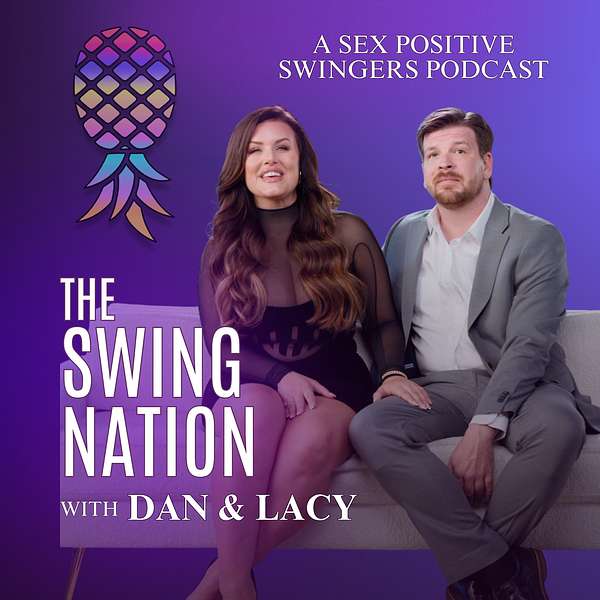
Dan and Lacy’s TSN position is pretty simple: ethical non-monogamy is not a hall pass, a personality upgrade, or a rescue plan for a relationship that is already running on fumes. It can be beautiful. It can be playful. It can bring a couple closer, open up confidence, create community, and let people stop pretending desire has to fit into one tiny approved box. But it only works when the people involved are honest enough to name what they want and mature enough to care how their choices land on everyone else.
That is where the lifestyle differs from the fantasy version. The fantasy says, “What if we could do whatever we want?” The lived version asks, “What can we explore while still protecting the connection we came in with?”
That question changes everything.
For couples watching mainstream stories about ENM, the takeaway should not be, “See, open relationships are healthier.” That is too easy, and honestly, it is just the same old ranking game wearing a different outfit. Monogamy is not the villain. Non-monogamy is not the cure. The real divide is between relationships built on consent, communication, boundaries, and respect, and relationships built on avoidance, pressure, secrets, or resentment.
If The Invite helps more people understand that, great. If Marie Claire’s coverage nudges the conversation away from scandal and toward nuance, even better. We need more stories where lifestyle people are not treated like cautionary tales, punchlines, or chaos machines. We need stories that show the community piece too: the friendships, the check-ins, the pre-party nerves, the post-party debrief, the wife-to-wife nod across the room that says, “We’re good.”
Because for a lot of people, the lifestyle is not just about more sex. It is about less shame. It is about finally being able to say the quiet part out loud and still be loved, respected, and invited back to the table.
That does not mean every couple should open up. Some should not. Some are not ready. Some are better off doing therapy, rebuilding trust, or admitting they want different lives. That is not failure. That is clarity. But for couples who are ready to do the work, mainstream culture finally showing a non-monogamous relationship as stable, intentional, and human is a welcome shift.
Still, the next step is bigger than “look, they are not doomed.” The next step is showing the full humanity of lifestyle relationships without sanding off the effort, awkwardness, humor, and care that make them real.
So here is the question: if mainstream media finally stops treating open relationships like a scandal, is the lifestyle community ready to show the world what responsible freedom actually looks like?
|
🍍 TSN Partner Spotlight Wisp — Discreet sexual health care, same-day prescriptions |